Eventum 2.7.0: The Studio Refresh
Eventum Studio gets one design system, a project page reorganised around building a generator, and live reporting on a running one. Renaming arrives for every object, and MCP agents get the operator's tools.
Eventum 2.7.0 is out. Studio carries most of the release: one design system across every screen, a project page reorganised around the work of building a generator, and live reporting on the instance and Monitoring pages. Renaming arrives for every object, and agents over MCP get the tools an operator uses.
Studio
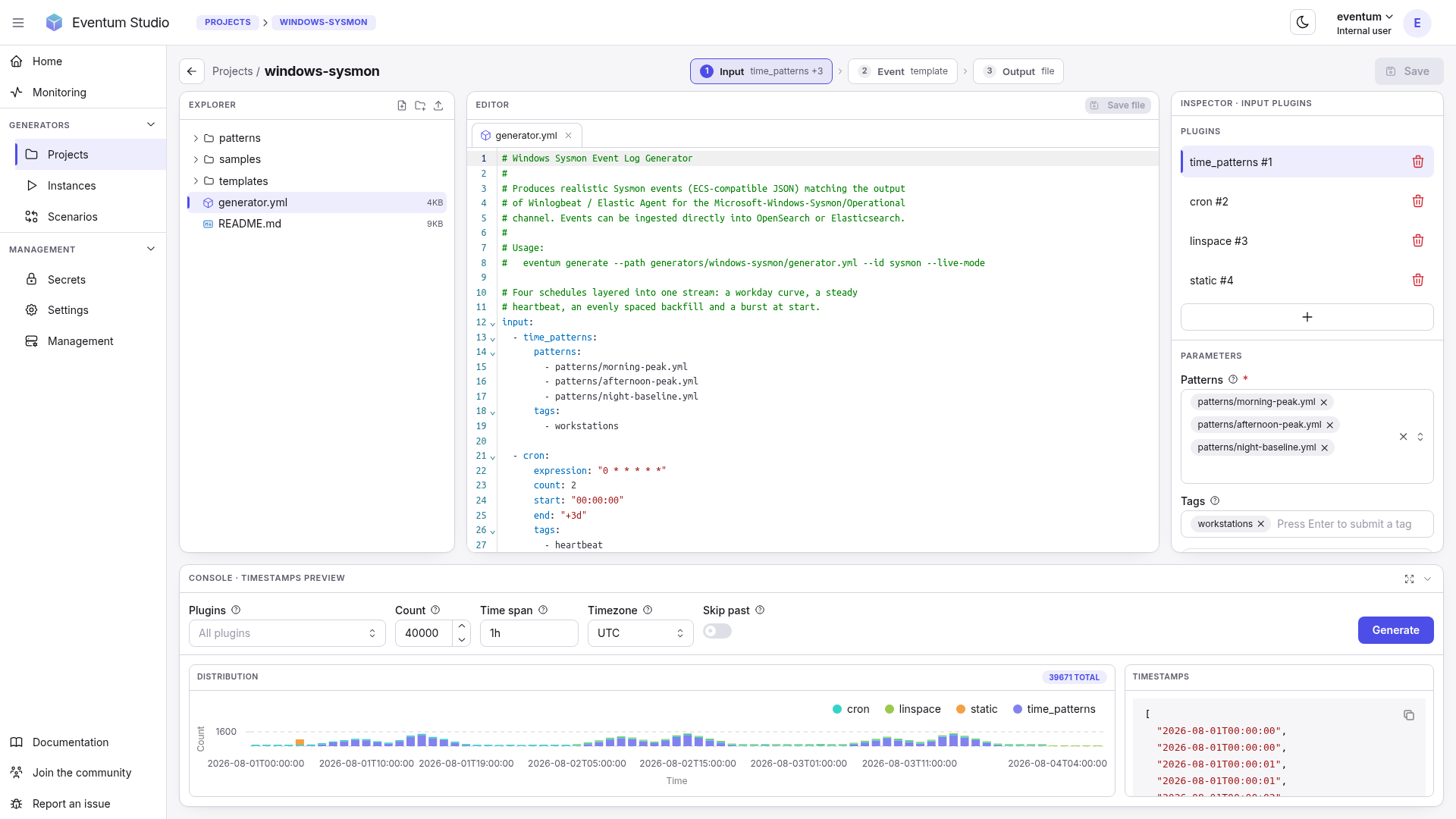
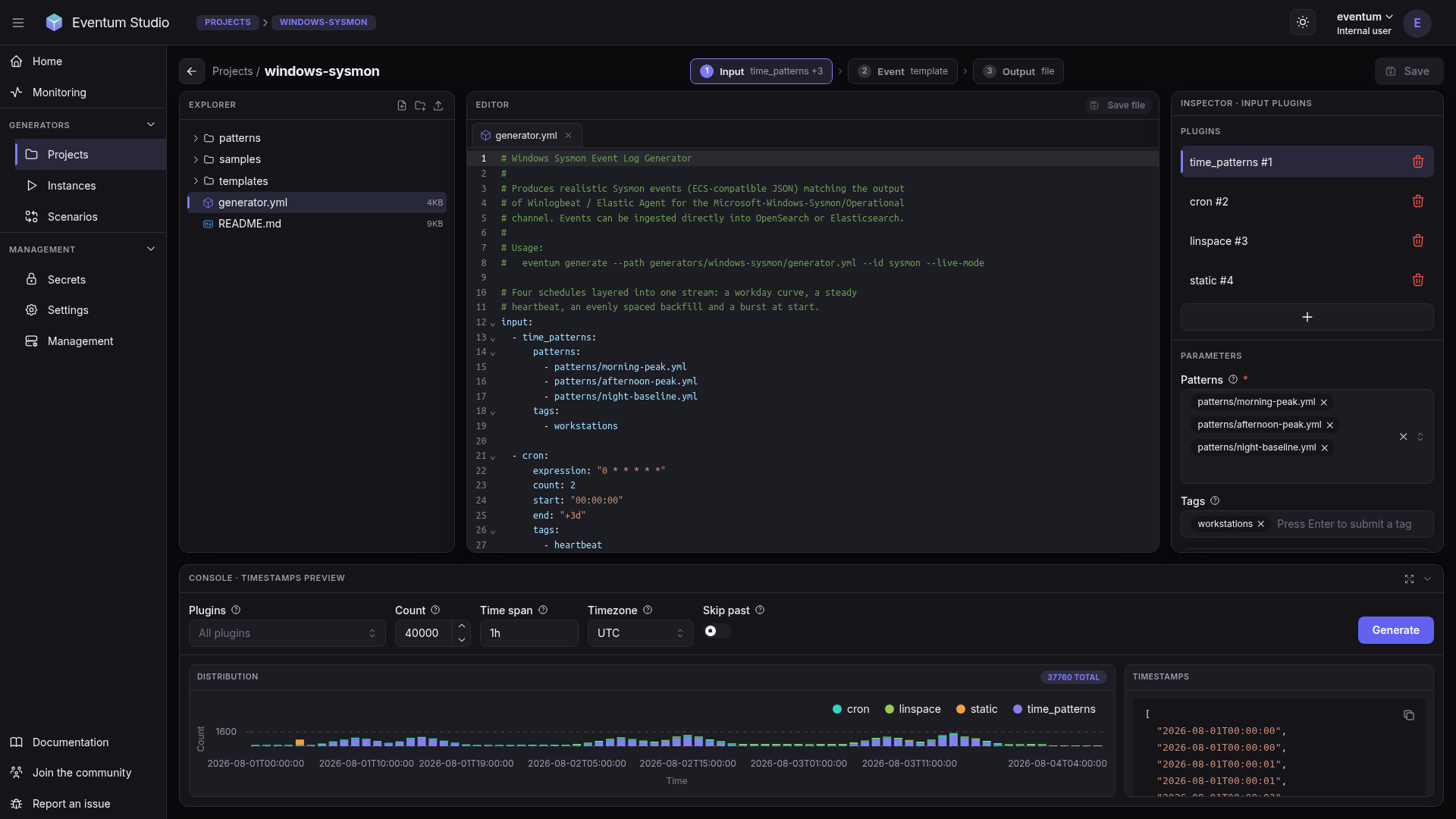
The project page is now a docked workspace — the files, the configuration and the debug console in one layout, with a single Save covering the configuration and every edited file at once. Debug results survive moving between stages, and a generator.yml that fails to parse opens in recovery mode instead of shutting the project.
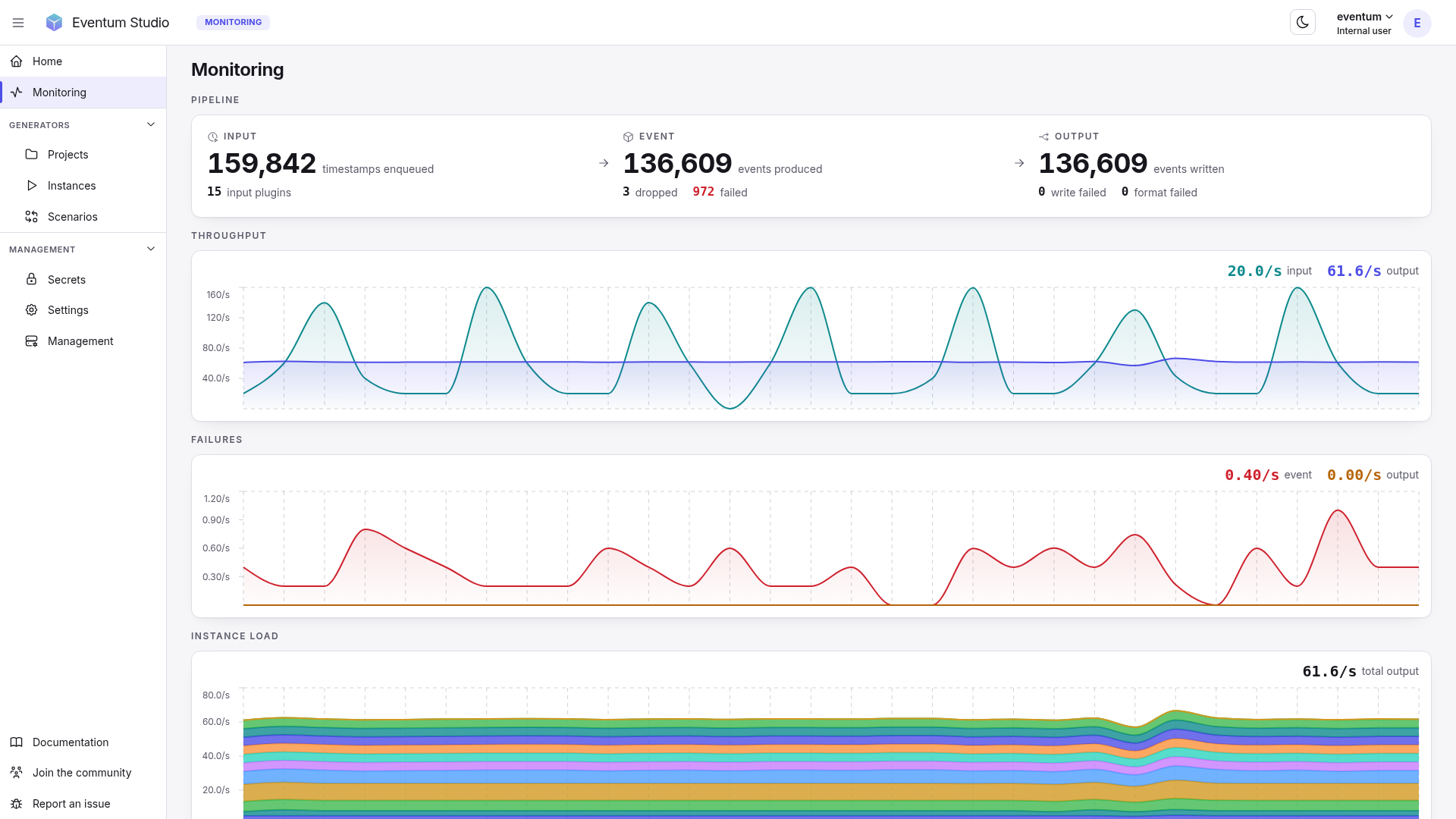
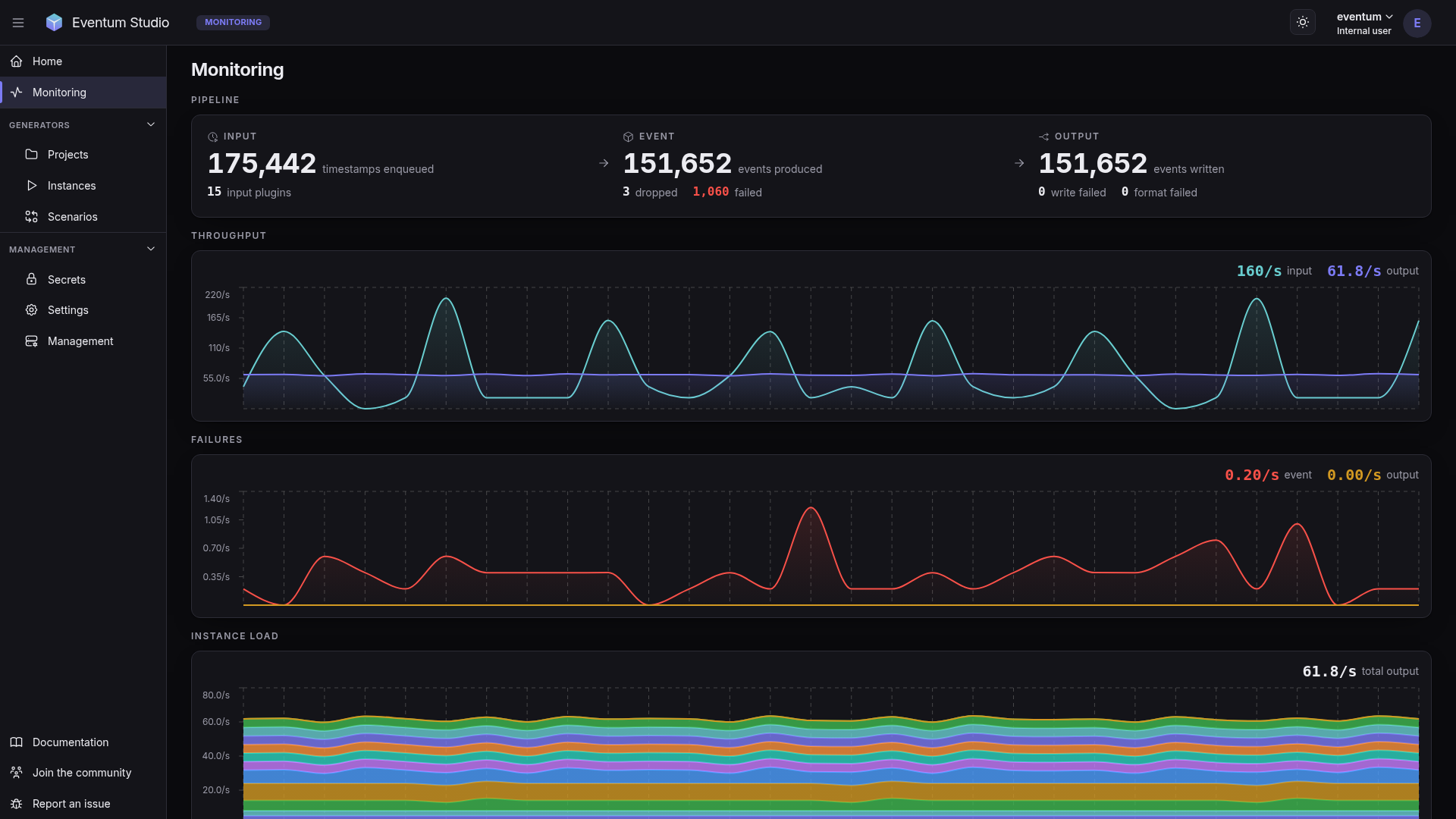
Monitoring and the instance page report a running pipeline live: stage throughput, failures over a rolling window, each instance's share of the output load, and host resources. The lists carry the same figures as sortable columns, and their filters live in the page address, so a filtered view can be bookmarked or sent on.
Renaming
Projects, instances, scenarios and secrets can be renamed instead of recreated, and Eventum repoints what refers to them. The exception is a ${secrets.<name>} written inside a configuration, so the dialog lists the projects reading that secret first. The same operations are available over the REST API and to an agent.
Agents
An agent could already write generators over MCP and start them. It now also handles scenarios, the shared global state, the settings and the lifecycle of the instance itself — everything that writes still behind server.mcp.allow_write.
Upgrade notes
A generator configuration no longer expands dotted keys, so nested settings are spelled as blocks — formatter: {format: plain} rather than formatter.format: plain; the shorthand keeps working in eventum.yml, startup.yml and time-pattern files. The opensearch and http outputs verify TLS certificates by default, so an endpoint with a self-signed or internal-CA certificate needs ca_cert pointed at the issuing CA, or verify: false. And server.ui_enabled and server.api_enabled are deprecated in favour of server.ui.enabled and server.api.enabled, warning at startup until they go away in 2.8.
The release also settles certificate paths in the ClickHouse, OpenSearch and HTTP outputs, dotted names in ${params.*} and ${secrets.*}, and the failure counters that account for every event a destination or a formatter refuses. The full list is in the 2.7.0 changelog.